ABOUT US

DevNetΒ is the Aotearoa New Zealand International Development Studies Network. For over 30 years we have connected academics, students, development policy-makers and practitioners to facilitate dialogue, debate and knowledge-sharing.
CONFERENCES

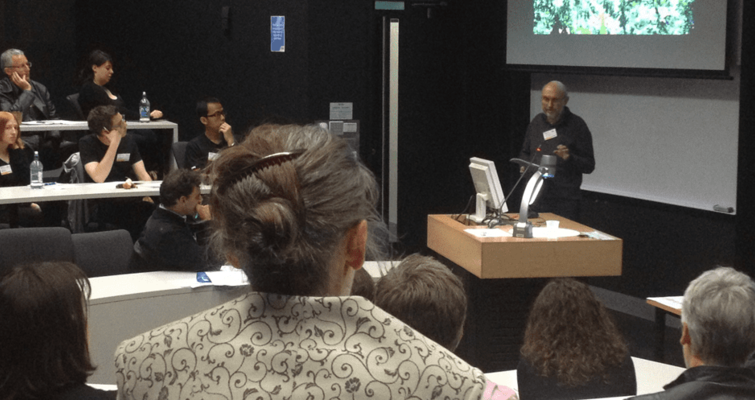
DevNet’s conferences have been held biennially since 1998. Aotearoa New Zealand’s largest, regular conference on international development, provides a great opportunity for people from Aotearoa, the Pacific and others to learn from each other and from international experts. Keynote speakers have…

GRANTS & AWARDS

DevNet provides field research grants to support postgraduate students and researchers based in New Zealand and the Pacific who are studying development issues relevant to New Zealand’s development cooperation and Pacific development.

JOIN THE DEVNET NETWORK

Stay informed about development news, grants, conferences and opportunities in New Zealand.

DevNet News

Follow us on social media for the latest updates

Β 

Comments Box SVG iconsUsed for the like, share, comment, and reaction icons
22 hours ago
DevNet

We are pleased to share the policy brief by Indeewari Kanchana Galagama, PhD Candidate in Politics and International Relations at Massey University.

Indeewari received the DevNet New Zealand Postgraduate Field Research Grant to conduct research on β€œEchoes of Silence: Unravelling Enforced Disappearances and the Quest for Reconciliation in Sri Lanka’s JVP Insurgencies (1971 and 1987–1989).”

Indeewari shared:

My research explored the long-term impacts of enforced disappearances that occurred during the 1971 and 1987–1989 JVP uprisings in southern Sri Lanka and sought to understand how families continue to live with unresolved loss across generations. Specifically, the study focused on second- and third-generation family members of the disappeared in Hambantota and Tangalle, examining how memory, silence, trauma, and political exclusion shape their everyday lives.

These families continue to navigate the social, emotional, and economic consequences of disappearance, ranging from prolonged uncertainty and disrupted livelihoods to intergenerational trauma and mistrust of state institutions. While enforced disappearance is often treated as a historical human rights violation, this research highlights how its effects remain present within households and communities decades later.

Fieldwork was conducted between June and August 2025 and involved in-depth discussions with affected families, as well as informal consultations with experts and practitioners working on issues of memory, trauma, and accountability. Undertaking this research held deep personal significance for me, as my own family was affected by political violence during this period. This positionality strengthened my commitment to relational ethics, care, and accountability throughout the research process.

The study contributes to broader discussions on peacebuilding and development by emphasising that justice processes must address not only legal accountability but also the lived and intergenerational consequences of disappearance. By centring the voices of affected families, the research underscores the importance of survivor-informed approaches to rebuilding trust, strengthening social cohesion, and supporting sustainable peace in post-conflict societies.

Read the policy brief here: devnet.org.nz/wp-content/uploads/2018/08/NZPG-Revised-Policy-Brief-Template-2024-V1_Indeewari.pdf
... See MoreSee Less

We are pleased to share the policy brief by Indeewari Kanchana Galagama, PhD Candidate in Politics and International Relations at Massey University.
Indeewari received the DevNet New Zealand Postgraduate Field Research Grant to conduct research on β€œEchoes of Silence: Unravelling Enforced Disappearances and the Quest for Reconciliation in Sri Lanka’s JVP Insurgencies (1971 and 1987–1989).”
Indeewari shared:
My research explored the long-term impacts of enforced disappearances that occurred during the 1971 and 1987–1989 JVP uprisings in southern Sri Lanka and sought to understand how families continue to live with unresolved loss across generations. Specifically, the study focused on second- and third-generation family members of the disappeared in Hambantota and Tangalle, examining how memory, silence, trauma, and political exclusion shape their everyday lives.
These families continue to navigate the social, emotional, and economic consequences of disappearance, ranging from prolonged uncertainty and disrupted livelihoods to intergenerational trauma and mistrust of state institutions. While enforced disappearance is often treated as a historical human rights violation, this research highlights how its effects remain present within households and communities decades later.
Fieldwork was conducted between June and August 2025 and involved in-depth discussions with affected families, as well as informal consultations with experts and practitioners working on issues of memory, trauma, and accountability. Undertaking this research held deep personal significance for me, as my own family was affected by political violence during this period. This positionality strengthened my commitment to relational ethics, care, and accountability throughout the research process.
The study contributes to broader discussions on peacebuilding and development by emphasising that justice processes must address not only legal accountability but also the lived and intergenerational consequences of disappearance. By centring the voices of affected families, the research underscores the importance of survivor-informed approaches to rebuilding trust, strengthening social cohesion, and supporting sustainable peace in post-conflict societies.
Read the policy brief here: https://devnet.org.nz/wp-content/uploads/2018/08/NZPG-Revised-Policy-Brief-Template-2024-V1_Indeewari.pdf
1 week ago
DevNet

We are excited to share the key research findings and recommendations from Nurussaadah Mokhtar, our DevNet Postgraduate Field Research Grant recipient at the University of Otago.

Nur’s study explores how supermarket urbanism shapes food access for low-income households in Malaysia and how urban agriculture can offer adaptive options within these systems. Two participatory mapping workshops in the low-income neighbourhoods of Kota Damansara and Damansara Damai, Selangor, involved seven women residents each, documenting local food outlets, gaps in access, supermarket dependence, barriers to fresh food, and vegetable consumption practices. Insights were complemented by interviews with officials from the Ministry of Agriculture and Food Security, urban planners, and practitioners of both community-based and commercial urban agriculture in Greater Kuala Lumpur.

Findings show that supermarkets dominate affordability, driving households to prioritise lower prices over convenience or cultural preference, often travelling further for cheaper produce. Welfare programmes channel households into supermarkets, enhancing purchasing power but limiting choice and marginalising local markets. Traditional markets remain culturally important but are less accessible and often costlier, with mobility, transport, and location strongly shaping food options.

Urban agriculture offers uneven benefits. Community-based initiatives can supplement household food supply, but outcomes depend on participation, capacity, and planning constraints. Commercial urban farms prioritise profit and supermarket supply chains, rarely improving affordable access for the urban poor. These dynamics highlight the need for coordinated policies that integrate food systems, urban planning, welfare programmes, and local food initiatives to enhance equitable urban food security.

Read Nur's Policy Brief Here: devnet.org.nz/wp-content/uploads/2018/08/NZPG-Policy-Brief_Nurussaadah-Mokhtar_University-of-Otag...

Photo 1: Harvesting fresh eggplant, pak choy and ulam raja (a common traditional vegetable) at a vibrant community farm tucked within the Kota Damansara public housing neighbourhood.

Photo 2: Exploring Malaysia’s largest commercial urban farm, perched atop a bustling supermarket in Greater Kuala Lumpur.

Photo 3: Collaborative mapping workshops with women who have been working in their community garden since 2010.
... See MoreSee Less

We are excited to share the key research findings and recommendations from Nurussaadah Mokhtar, our DevNet Postgraduate Field Research Grant recipient at the University of Otago.
Nur’s study explores how supermarket urbanism shapes food access for low-income households in Malaysia and how urban agriculture can offer adaptive options within these systems. Two participatory mapping workshops in the low-income neighbourhoods of Kota Damansara and Damansara Damai, Selangor, involved seven women residents each, documenting local food outlets, gaps in access, supermarket dependence, barriers to fresh food, and vegetable consumption practices. Insights were complemented by interviews with officials from the Ministry of Agriculture and Food Security, urban planners, and practitioners of both community-based and commercial urban agriculture in Greater Kuala Lumpur.
Findings show that supermarkets dominate affordability, driving households to prioritise lower prices over convenience or cultural preference, often travelling further for cheaper produce. Welfare programmes channel households into supermarkets, enhancing purchasing power but limiting choice and marginalising local markets. Traditional markets remain culturally important but are less accessible and often costlier, with mobility, transport, and location strongly shaping food options.
Urban agriculture offers uneven benefits. Community-based initiatives can supplement household food supply, but outcomes depend on participation, capacity, and planning constraints. Commercial urban farms prioritise profit and supermarket supply chains, rarely improving affordable access for the urban poor. These dynamics highlight the need for coordinated policies that integrate food systems, urban planning, welfare programmes, and local food initiatives to enhance equitable urban food security.
Read Nurs Policy Brief Here: https://devnet.org.nz/wp-content/uploads/2018/08/NZPG-Policy-Brief_Nurussaadah-Mokhtar_University-of-Otago_2026-1.docx
Photo 1: Harvesting fresh eggplant, pak choy and ulam raja (a common traditional vegetable) at a vibrant community farm tucked within the Kota Damansara public housing neighbourhood.  
Photo 2: Exploring Malaysia’s largest commercial urban farm, perched atop a bustling supermarket in Greater Kuala Lumpur.
Photo 3: Collaborative mapping workshops with women who have been working in their community garden since 2010.Image attachmentImage attachment
1 week ago
DevNet

Meet Rosie O’Hagan, recipient of a DevNet Postgraduate Field Research Grant for her research, Combating Gender-based Violence Amid Colombian Armed Conflict: NGO Activities, Empowering Approaches, and Ongoing Challenges.

Reflecting on her fieldwork, Rosie shared:

β€œMy field research took me to the vibrant cities of BogotΓ‘ and Bucaramanga, where I explored how NGOs work to prevent and respond to gender-based violence in the context of Colombia’s ongoing armed conflict. Through qualitative methods, this research is deeply grounded in the lived experiences of practitioners who confront this issue every day, and I was continually inspired by their commitment and courage. I am profoundly grateful to DevNet and MFAT for supporting this research, and to my incredible supervisors, Regina Scheyvens and Aisling Gallagher, whose guidance and encouragement have been invaluable throughout this journey.”

Discover Rosie's key findings and policy recommendations in her policy brief here: devnet.org.nz/wp-content/uploads/2018/08/OHagan-Rose-Policy-Brief-1.docx
... See MoreSee Less

Meet Rosie O’Hagan, recipient of a DevNet Postgraduate Field Research Grant for her research, Combating Gender-based Violence Amid Colombian Armed Conflict: NGO Activities, Empowering Approaches, and Ongoing Challenges.
Reflecting on her fieldwork, Rosie shared:
β€œMy field research took me to the vibrant cities of BogotΓ‘ and Bucaramanga, where I explored how NGOs work to prevent and respond to gender-based violence in the context of Colombia’s ongoing armed conflict. Through qualitative methods, this research is deeply grounded in the lived experiences of practitioners who confront this issue every day, and I was continually inspired by their commitment and courage. I am profoundly grateful to DevNet and MFAT for supporting this research, and to my incredible supervisors, Regina Scheyvens and Aisling Gallagher, whose guidance and encouragement have been invaluable throughout this journey.” 
Discover Rosies key findings and policy recommendations in her policy brief here: https://devnet.org.nz/wp-content/uploads/2018/08/OHagan-Rose-Policy-Brief-1.docxImage attachment

Comment on Facebook

Well done Rosie

This is such great mahi Rosie O'Hagan! Ka rawe.

2 weeks ago
DevNet

Congratulations to Dr Emma Powell, Lauren Turner, and Fran Little at Te Puna Vai Marama - Cook Islands Centre for Research on winning the DevNet Pacific Writing Retreat Grant 2026.

The retreat aims to create dedicated space for Pacific researchers to write, fostering more published work by Pacific Island scholars and equipping participants with the skills and experience to facilitate their own writing retreats in the future.

Drawing on their experience in academic writing development and research capacity-building initiatives in the Cook Islands, the team will deliver a facilitated academic writing and mentorship programme. With support from DevNet, up to 14 researchers from the Cook Islands will have the opportunity to work alongside experienced mentors in a supportive writing environment, strengthening their academic writing and research skills.
... See MoreSee Less

Comment on Facebook

Congratulations cuz Dr Emma Powell!! So lovely to meet you and your family and so awesome to make the close family connection - meitaki ranuinui Simiona Teiotu. Can't wait to catch up again soon and explore potential collabs xo

Great nius! Congratulations πŸ™Œ so well deserved xx

Congratulations Fran and your team Te Puna Vai Marama.❀

Wahoo this is awesome

Yay! Congratulations

akamaroiroi to al the team at Te Puna Vai Marama - Cook Islands Centre for Research

❀️❀️❀️

πŸ™Œ πŸ™Œ πŸ™Œ

Amazing news and achievements πŸ‘ congratulations

Wonderful news! Great work team

View more comments

Shares423