
- July 14, 2025 |
- Awardee Profiles and Policy Briefs
Avelina Rokoduru, Otago University
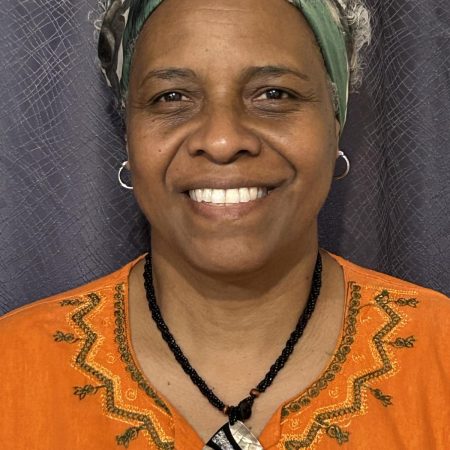
Avelina’s Research Topic: Masculinities and Gender-based Violence (GBV) in Fiji: The Perceptions of iTaukei (indigenous Fijian) Men
Bula Vinaka! I am Avelina Rokoduru. I’m completing my PhD studies at Te Tumu, School of Māori, Pacific & Indigenous Studies, Division of Humanities, University of Otago, Dunedin campus. My research is about Fiji’s indigenous (iTaukei) men and how they engage with gender and gender-based violence (GBV) in their intimate partner relationships (IPR).
According to a national study in 2010/2011 (FWCC, 2013), Fiji records one of the highest rates of GBV in the world, with its main perpetrators as male spouses and partners in IPR. For the past 41 years, Fiji’s gender and GBV programs have placed emphasis on women and girls as victims and survivors. The national response and approach are based on feminism, human rights and the rule of law. In 2015, the estimated economic cost of GBV to the country was FJD$290M (NZD$208M), i.e. 7% of its Gross Domestic Product (Movono, 2017).
The country is recognised as a global leader in condemning violence (MOWCPA, 2024:30). However, violence continues in this small country of about 900,000 people. Lives have been lost, and the trauma of loss, separation, pain, fear, anxiety and stigma has led to broken and dysfunctional relationships for families and communities. These clearly illustrate the impacts of this social scourge. Earlier in 2020, Fiji’s lead advocate against Violence Against Women (VAW) had publicly assessed the national response to be ineffective. Following the tragic deaths of three more women through intimate partner violence (IPV) in a single weekend earlier this year, 2025, Fiji’s Prime Minister, Sitiveni Rabuka, and the Minister for Women, Children, and Poverty Alleviation (MOWCPA), Sashi Kiran, publicly criticized the national response as ineffective.
This study is an exploration, asking ‘the elephant in the room’ why he inflicts violence on his loved ones. This journey has taken me through a maze of contentious issues and their discourses regarding indigeneity, gender, masculinities and social relationships in Fiji’s pre- and post-colonial histories. It has highlighted the challenges of staying connected and authentic to collectively constructed meanings and realities, as opposed to postmodern individual ones.
I am grateful to MFAT/DevNet for funding this research as well as the opportunity to develop a knowledge product and to disseminate some of my research findings through it. I hope that this study and its policy brief will serve a purpose and be useful where they are needed. Vinaka vakalevu.
Avelina Rokoduru, PhD Student, Otago University

Bex Ansell, Auckland University
Related Post
- December 13, 2025
Ruveni Tuimavana, Massey University
- October 25, 2025
Hanh Dang, Otago University

- October 13, 2025