Emelda’s research topic: Challenges and Barriers that students faced in transitioning from secondary schools into higher tertiary education: The perspectives of Divine Word University students, Madang Province, Papua New Guinea
My research explored the challenges faced by students transitioning from secondary school to tertiary education in Papua New Guinea and aimed to understand the academic, technological, social, and institutional factors that influence their adjustment and success in higher education. Specifically, the study examined how students, particularly those from rural and disadvantaged backgrounds, experience difficulties adapting to the expectations and demands of university life, including independent learning, English language proficiency, digital literacy, and navigating institutional systems and support structures. The research also sought to identify practical solutions that can inform government policies and institutional strategies to strengthen student transition, improve academic outcomes, and promote more equitable access to higher education.
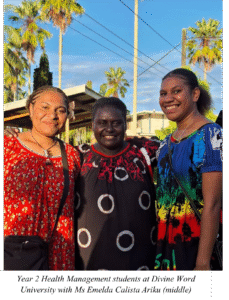
Fieldwork for this study was conducted at Divine Word University in October 2025, where the experiences and perspectives of students highlighted the complex and multifaceted nature of transitioning into tertiary education. Undertaking this research held significant value for me because it focused on understanding the realities faced by students within the Papua New Guinean context, particularly those entering university from under-resourced educational and socio-economic backgrounds. Through engaging with participants and examining their lived experiences, the study revealed that transition challenges are deeply interconnected and often compounded by limited preparation at secondary level and insufficient institutional support systems. These findings reinforced the importance of adopting more inclusive and student-centred approaches to higher education.
My research highlighted the critical need for stronger and more targeted support systems to enhance students’ academic success and overall well-being. By exploring the intersection between educational preparedness, social adjustment, and institutional responsibility, the study contributes to broader discussions on improving the quality, accessibility, and inclusiveness of higher education in Papua New Guinea. The findings emphasise that successful transition requires coordinated interventions such as mentoring programs, practical and engaging teaching approaches, language and ICT training, and improved orientation initiatives. Ultimately, the study demonstrates that responsive and equitable support mechanisms are essential in enabling students to confidently adapt, participate, and succeed in tertiary education.
EMELDA CALISTA ARIKU| EARLY CAREER RESEARCHER| SOLOMON ISLANDS NATIONAL UNIVERSITY